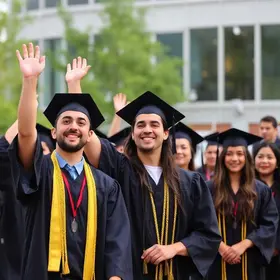

Community colleges were intended to help all students access higher education, regardless of socioeconomic or geographical constraints. Subsequently, some community colleges have adjusted their admission policies, allowing undocumented immigrants to enroll on campus.
However, these changes have been met with great controversy, especially during a time when community colleges are facing record high enrollment rates. In particular, North Carolina has been battered with an array of protestors who argue that community colleges are already struggling to provide for its massive number of documented, legal students. In light of these enrollment demands, how can community colleges accommodate undocumented students?
In this video, an undocumented student shares how she was still able to pay for college despite not being eligible for federal aid.
As the debate continues to rage on both sides, some experts predict that community colleges across the country will soon feel pressured to permit undocumented immigrants into their classrooms.
Undocumented Students: The Heated Debate
Examining these controversial changes to community college policies in North Carolina, WRAL News reports that all community colleges in the state must accept qualified illegal immigrants if the applicants meet all of the admission guidelines. Prior to this new policy, college officials were required to reject any undocumented students, even if the applicants were over the age of 18 and had earned a high school diploma in the United States.
How did the policy shift so dramatically? In 1997, Mike Easley, former Attorney General and Governor of North Carolina, expressed his support in allowing undocumented immigrants to enroll in community colleges. A lawyer, speaking on behalf of the entire North Carolina Community College Network, ordered each of the state’s 58 community college campuses to comply with Easley’s decree.
In this video from Time magazine, journalist Jose Antonio Vargas talks about growing up undocumented in America, and why immigration is the most misunderstood issue in the U.S. today.
As many North Carolina residents were surprised to learn, approximately half of the state’s community college campuses already permitted certain students without proof of citizenship to enroll. However, other campuses were forced to shift their enrollment policies. For example, Wake Technical Community College, located in Raleigh, previously required all student applicants to prove their legal residency but were now mandated to enroll all qualified students, regardless of their immigration status.
Critics of the policy argue that the government is taking away the individual rights of each college campus. Adding to the tension, the North Carolina policy is not being well received by voices from national leaders, including various US representatives and senators. One of the outspoken critics of this policy was US Representative Sue Myrick, a Republican of North Carolina. According to Myrick, “Our community colleges are supposed to educate and train American citizens to enter the workforce. But North Carolina wants to educate and train illegal aliens so they can directly compete against American citizens for the same jobs? That is just plain wrong.”
The Benefits of Undocumented Student Enrollment
Supporters of the new policy assert that accepting illegal immigrants into community college programs will serve to benefit the overall economy and success of the state. First and foremost, the community college can charge a very high tuition rate for undocumented workers. Essentially, students who attend a community college from another state, or in this case, another country, must pay a much more expensive “out of state” tuition fee. As a result, if an undocumented individual wanted to apply for classes at Wake Technical Community College, then he or she would be forced to pay an out of state tuition fee of approximately $7,000 to $10,000. As a result of these out of state charges, supporters assert that community colleges could earn, on average, an extra $2,000 for each undocumented student that is enrolled for a full class schedule. With the higher tuition revenues, schools may be able to improve their budgets despite a struggling economy.
This video describes an undocumented student's journey to Harvard.
Many immigration activist groups have also gathered to speak in favor of the new North Carolina community college policy changes. For example, leaders of “El Pueblo,” a Latino advocacy group, assert that allowing undocumented immigrants to enroll in college courses will provide generations of individuals with greater opportunities to advance and thrive. As many undocumented individuals were brought by parents to the United States, often as young children or infants, denying students the chance to continue their education would be seen as an unjust punishment for a crime that many never chose to commit.
The debate regarding enrolling undocumented immigrants into community colleges will certainly continue to rage. Especially during a time when documented students are being forced onto waiting lists, there is a strong wall of opposition against the policy changes. However, the opposition is met with an equal force of supporters who believe in allowing all students access to higher education.
Questions? Contact us on Facebook. @communitycollegereview