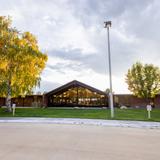
Western Nebraska Community College

1601 East 27th Street
Scottsbluff, NE 69361
Top-Ranked (2026-27): View Rankings
  • Western Nebraska Community College is a comprehensive community college committed to serving the residents of western Nebraska with higher education and lifelong learning opportunities. The faculty, staff, and the Board of Governors seek to provide leadership in education while responding to the identified needs of area residents by providing high quality educational programs and support services that are accessible to all who can benefit from them.

School Highlights

Western Nebraska Community College serves 1,569 students (40% of students are full-time).
The college's student-teacher ratio of 17:1 is lower than the state community college average of 27:1.
Minority enrollment is 42% of the student body (majority Hispanic), which is more than the state average of 37%.

Quick Facts (26-27)

  • Enrollment: 1,569 students
  • In-state tuition: $2,496
  • Out-state tuition: $2,808
  • Student-teacher ratio: 17:1
  • Minority enrollment: 42%
  • Source: Integrated Postsecondary Education Data System (IPEDS)

Top Rankings

Western Nebraska Community College ranks among the top 20% of public schools in Nebraska for:

Category
Attribute
Affordability

School Overview

The teacher population of 79 teachers has declined by 66% over five years.
Western Nebraska Community College
(NE) Community College Avg.
Carnegie Classification
Associate's Colleges
Not applicable, not in Carnegie universe (not accredited or nondegree-granting)
Institution Level
At least 2 but less than 4 years
Institution Control
Public
Public
Total Faculty
79 staff
16 staff
School Calendar
AccreditationAccred.
Higher Learning Commission (HLC)

Student Body

The student population of Western Nebraska Community College has stayed relatively flat over five years.
The student-teacher ratio of 17:1 has increased from 7:1 over five years.
The Western Nebraska Community College diversity score of 0.59 is more than the state average of 0.57. The school's diversity has grown by 7% over five years.
Total Enrollment
1,569 students
607 students

Showing 2011–2025. Full 19-year historical data available below ↓

Student-Teacher Ratio
17:1
27:1
# Full-Time Students
634 students
125 students

Showing 2012–2025. Full 19-year historical data available below ↓

# Part-Time Students
935 students
482 students

Showing 2008–2025. Full 19-year historical data available below ↓

# Enrollment Undergraduate
1,569 students
186 students
# Full-Time Undergraduate Students
634 students
122 students

Showing 2012–2025. Full 19-year historical data available below ↓

# Part-Time Undergraduate Students
935 students
708 students
% American Indian/Alaskan
2%
2%
% Asian
1%
2%

Showing 2008–2025. Full 19-year historical data available below ↓

% Hispanic
27%
16%

Showing 2008–2025. Full 19-year historical data available below ↓

% Black
2%
6%

Showing 2008–2025. Full 19-year historical data available below ↓

% White
58%
63%

Showing 2010–2025. Full 19-year historical data available below ↓

% Non Resident races
5%
1%
% Unknown races
4%
6%
Diversity Score
0.59
0.57

Showing 2011–2025. Full 19-year historical data available below ↓

College Completion Rate (Students who graduate in less than 4 years)
34%
51%

Showing 2010–2025. Full 19-year historical data available below ↓

Average Graduate Earnings (10 Years)
$31,500
$31,000

Tuition & Financial Aid

The public in-state tuition of $2,496 is less than the state average of $4,615. The in-state tuition has declined by 16% over four years.
The public out-state tuition of $2,808 is less than the state average of $5,803. The out-state tuition has declined by 8% over four years.
In-State Tuition Fees
$2,496
$4,615
Out-State Tuition Fees
$2,808
$5,803
% Students Receiving Some Financial Aid
88%
87%

Showing 2011–2025. Full 19-year historical data available below ↓

Median Debt for Graduates
$9,203
$11,004

Showing 2008–2020. Full 14-year historical data available below ↓

Median Debt for Dropouts
$4,500
$5,330
Source: 2025 (or latest year available) Integrated Postsecondary Education Data System (IPEDS)

School Notes

  • Western Nebraska Community College is known for providing students with a great education at an affordable price. Since opening its doors in 1926, WNCC has provided high quality educational opportunities for students of all ages from around the world. Today, WNCC offers more than 80 degree and certificate programs through a semester system. WNCC remains committed to vocational and academic excellence and prepares students for success in the real world. WNCC's main campus is located in Scottsbluff, NE, on the western edge of the Nebraska panhandle. The Sidney Center is located 70 miles south of the main campus in Sidney, NE. The Scottsbluff Campus main structure is comprised of three classroom areas, an academic computing center, a theatre/music area, a 2,201 seat gymnasium, and a comprehensive library, and interactive video distance learning classrooms. Pioneer Hall is a three-level residence hall for both male and female students. Attached to this facility is the Pioneer Activity Center.

Frequently Asked Questions

How much does Western Nebraska Community College cost?
Western Nebraska Community College's tuition is approximately $2,496 for In-State students and $2,808 for Out-State students.
What is Western Nebraska Community College's ranking?
Western Nebraska Community College ranks among the top 20% of community college in Nebraska for: Least expensive tuition.

Recent Articles

Licensure Pass Rates: What Students Should Check
Learn how to evaluate licensure pass rates before enrolling in community college career programs, compare exam results, identify warning signs, and choose training that supports professional licensing and employment goals.
Do Your Transfer Credits Count Toward Your Major?
A college course may transfer without counting toward your major. Learn how to check degree requirements, identify elective credits, avoid graduation delays, and protect your community college transfer plan.
Transfer With 45 Credits, 60 Credits, or a Degree?
Should you transfer with 45 credits, 60 credits, or an associate degree? Compare university requirements, tuition savings, graduation timelines, and transfer benefits to choose the best path for your goals.

Quick Facts (26-27)

  • Enrollment: 1,569 students
  • In-state tuition: $2,496
  • Out-state tuition: $2,808
  • Student-teacher ratio: 17:1
  • Minority enrollment: 42%
  • Source: Integrated Postsecondary Education Data System (IPEDS)

Related School Videos

Did You Know?

For Nebraska public community colleges, the average tuition is approximately $4,615 per year for in-state students and $5,803 for out-of-state students. For private community colleges, the average yearly tuition is approximately $16,095 per year. Read more about average community college tuition costs across the country.

Nebraska community colleges have a diversity score of 0.57, which is lower than the national average of 0.74. The most diverse community college in Nebraska is College of Hair Design-Downtown. Read more about community college diversity statistics in the USA.

Quick Links