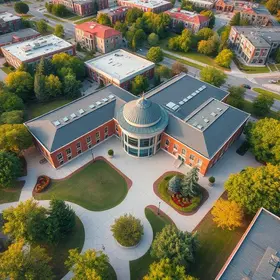
Pima Medical Institute-Denver

  • Pima Medical Institute is a highly experienced and proven leader in health care education. For more than 35 years, Pima Medical Institute has offered specialized, quality healthcare training that is quick and affordable, and has been serving the Denver community since 1988. In Denver, we offer medical training in medical Training in Denver certificate programs dental assistant, expanded duties dental assistant, medical assistant, medical administrative assistant, pharmacy technician, phlebotomy technician, veterinary assistant.

School Highlights

Pima Medical Institute-Denver serves 664 students (100% of students are full-time).
The college's student-teacher ratio of 18:1 is lower than the state community college average of 35:1.
Minority enrollment is 66% of the student body (majority Hispanic), which is more than the state average of 51%.

Quick Facts (26-27)

  • Enrollment: 664 students
  • Student-teacher ratio: 18:1
  • Minority enrollment: 66%
  • Source: Integrated Postsecondary Education Data System (IPEDS)

School Overview

The teacher population of 37 teachers has declined by 51% over five years.
Pima Medical Institute-Denver
(CO) Community College Avg.
Carnegie Classification
Special Focus Two-Year: Health Professions
Associate's Colleges
Institution Level
At least 2 but less than 4 years
Institution Control
Private for-profit
Private, non-profit
Year Founded
1972
Total Faculty
37 staff
56 staff

Showing 2019–2025.

Number of Programs Offered
13
26
AccreditationAccred.
Accrediting Bureau of Health Education Schools (ABHES)

Student Body

The student population of Pima Medical Institute-Denver has declined by 7% over five years.
The student-teacher ratio of 18:1 has increased from 10:1 over five years.
The Pima Medical Institute-Denver diversity score of 0.63 is less than the state average of 0.68. The school's diversity has stayed relatively flat over five years.
Total Enrollment
664 students
2,084 students

Showing 2018–2025.

Student-Teacher Ratio
18:1
35:1

Showing 2019–2025.

# Full-Time Students
664 students
671 students

Showing 2018–2025.

# Enrollment Undergraduate
664 students
1,072 students
# Full-Time Undergraduate Students
664 students
641 students

Showing 2018–2025.

% American Indian/Alaskan
1%
1%

Showing 2018–2025.

% Asian
3%
3%

Showing 2019–2025.

% Hispanic
49%
26%

Showing 2019–2025.

% Black
6%
8%

Showing 2019–2025.

% White
34%
49%

Showing 2016–2025.

% Two or more races
7%
4%

Showing 2019–2025.

Diversity Score
0.63
0.68

Showing 2016–2025.

College Completion Rate (Students who graduate in less than 4 years)
62%
61%

Showing 2017–2025.

Median Earnings 10 Years After Entry (measured in 2022-2023, in 2024 dollars)
$44,191
$44,191

Showing 2014–2023.

Points are in the dollars of their own College Scorecard release, and the colleges behind the state line differ by period. The lines do not show inflation-adjusted growth.

Tuition & Financial Aid

% Students Receiving Some Financial Aid
75%
82%

Showing 2017–2025.

Median Debt for Graduates
$9,500
$10,981

Showing 2011–2020.

Median Debt for Dropouts
$4,718
$5,000

Showing 2011–2020.

Source: 2025 (or latest year available) Integrated Postsecondary Education Data System (IPEDS)

Recent Articles

Fast Credential or Degree Pathway? How to Choose
Short-term training has more funding options, but speed is only one consideration. Compare immediate job preparation with documented degree pathways, remaining coursework, future costs, and realistic plans for returning.
Aerospace & Chip Programs: Should You Follow the Funding?
New investment is expanding technical training, but funding alone should not determine your major. Learn how to evaluate funded programs, student access, career fit, and benefits for your entering class.
Should You Choose a Community College Program Built Around One Major Local Employer?
A community college program tied to one major employer can offer valuable training. Learn how to weigh specialized skills, local job dependence, and your options if that employer changes course.

Quick Facts (26-27)

  • Enrollment: 664 students
  • Student-teacher ratio: 18:1
  • Minority enrollment: 66%
  • Source: Integrated Postsecondary Education Data System (IPEDS)

Quick Links