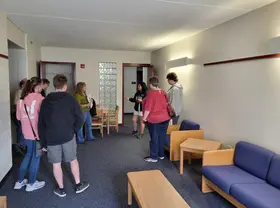
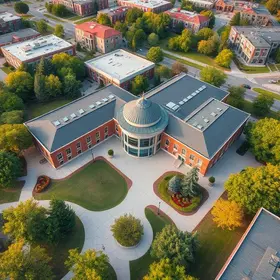
Denver Automotive and Diesel College offers you a great future if you’re interested in learning to be an Automotive Technician. Training focuses on skills that you’ll use every day in your new career, as well as honing the dedication, drive and discipline that will help you achieve success. If you’ve been looking at automotive technology schools, choose an automotive and diesel technology school that focuses on hands-on training, with industry standard equipment and experienced instructors – choose Denver Automotive and Diesel College!
School Highlights
Lincoln College of Technology-Denver serves 1,212 students (100% of students are full-time).
The college's student-teacher ratio of 25:1 is lower than the state community college average of 35:1.
Minority enrollment is 61% of the student body (majority Hispanic), which is more than the state average of 51%.
Quick Facts (2026)
Enrollment: 1,212 students
Acceptance Rate: 37%
Student-teacher ratio: 25:1
Minority enrollment: 61%
Source: Integrated Postsecondary Education Data System (IPEDS)
School Overview
The teacher population of 49 teachers has declined by 46% over five years.
Note: Data may not be displayed on any public-facing website or service that replicates or resembles a college search or review portal without prior written permission. See our Terms of Service.
The student population of Lincoln College of Technology-Denver has declined by 20% over five years.
The student-teacher ratio of 25:1 has increased from 15:1 over five years.
The Lincoln College of Technology-Denver diversity score of 0.68 is more than the state average of 0.00. The school's diversity has grown by 9% over five years.
Note: Data may not be displayed on any public-facing website or service that replicates or resembles a college search or review portal without prior written permission. See our Terms of Service.
Note: Data may not be displayed on any public-facing website or service that replicates or resembles a college search or review portal without prior written permission. See our Terms of Service.
Note: Data may not be displayed on any public-facing website or service that replicates or resembles a college search or review portal without prior written permission. See our Terms of Service.
Note: Data may not be displayed on any public-facing website or service that replicates or resembles a college search or review portal without prior written permission. See our Terms of Service.
Note: Data may not be displayed on any public-facing website or service that replicates or resembles a college search or review portal without prior written permission. See our Terms of Service.
Note: Data may not be displayed on any public-facing website or service that replicates or resembles a college search or review portal without prior written permission. See our Terms of Service.
Note: Data may not be displayed on any public-facing website or service that replicates or resembles a college search or review portal without prior written permission. See our Terms of Service.
Note: Data may not be displayed on any public-facing website or service that replicates or resembles a college search or review portal without prior written permission. See our Terms of Service.
Note: Data may not be displayed on any public-facing website or service that replicates or resembles a college search or review portal without prior written permission. See our Terms of Service.
Note: Data may not be displayed on any public-facing website or service that replicates or resembles a college search or review portal without prior written permission. See our Terms of Service.
Note: Data may not be displayed on any public-facing website or service that replicates or resembles a college search or review portal without prior written permission. See our Terms of Service.
Note: Data may not be displayed on any public-facing website or service that replicates or resembles a college search or review portal without prior written permission. See our Terms of Service.
College Completion Rate (Students who graduate in less than 4 years)
Note: Data may not be displayed on any public-facing website or service that replicates or resembles a college search or review portal without prior written permission. See our Terms of Service.
Note: Data may not be displayed on any public-facing website or service that replicates or resembles a college search or review portal without prior written permission. See our Terms of Service.
Note: Data may not be displayed on any public-facing website or service that replicates or resembles a college search or review portal without prior written permission. See our Terms of Service.
Note: Data may not be displayed on any public-facing website or service that replicates or resembles a college search or review portal without prior written permission. See our Terms of Service.
Note: Data may not be displayed on any public-facing website or service that replicates or resembles a college search or review portal without prior written permission. See our Terms of Service.
Note: Data may not be displayed on any public-facing website or service that replicates or resembles a college search or review portal without prior written permission. See our Terms of Service.
Source: 2025 (or latest year available) Integrated Postsecondary Education Data System (IPEDS)
School Notes
School Mascot: Lincoln Wolves
Denver Automotive Institute, as we were known then, held its first
class of 27 students in downtown Denver, Colorado in May of 1963.
As student population and demand grew, a Diesel Mechanics
curriculum was added in 1966. Within three years a newly-renovated
71,000 sq. ft. facility opened, fully realizing our new name:
Denver Automotive and Diesel College - DADC. Enhancing program
offerings and estabilishing credibility as one of the top national
educators became a priority. The consistent and regular refinements
we made met various NATEF requirements and we became a "Master
Certified Automotive School". Soon afterwards, we further enhanced
our programs by adding Associate of Applied Science Degree Programs
in Automotive, Diesel and Master Technology. DADC's Automotive and
Diesel programs can help you learn the diagnostic procedures
necessary to determine complex problems, fix them and provide
ongoing maintenance. In addition, you'll have an in-depth
understanding of why automotive and diesel engines work the way
they do, allowing you to better fix and maintain vehicles, and
provide a higher level of service. Using hands-on training, a solid
system of knowledge and our long-standing reputation with major
manufacturers and shops, we can help you jump-start your career in
the Automotive and Diesel Industries. Denver Automotive and Diesel
College (DADC) can offer you endless possibilities and
opportunities to pursue skiing, snowboarding, snowdecks,
snowskates, and other winter activities. DADC utilizes several fund
sources to assist students in paying for their education. Funding
is provided by Federal grants, various scholarships, Veterans
benefits, low interest Perkins (Campus Based) loans, low interest
Stafford loans, and by other fund sources specifically designed to
fund education to qualified applicants at DADC.
Sample of notable school alumni/alumnae:
J. Rivera - Medical Assistant graduate, Iselin NJ Campus -
Christian Rado - Electronics graduate, Allentown PA Campus -
Dion G. - Diesel and Truck Technology graduate, Indianapolis IN Campus -
What is the acceptance rate of Lincoln College of Technology-Denver?
The acceptance rate of Lincoln College of Technology-Denver is 37%, which is lower than the state average of 93%.
Who are famous alumni from Lincoln College of Technology-Denver?
Lincoln College of Technology-Denver famous alumni include: J. Rivera - Medical Assistant graduate, Iselin NJ Campus, Christian Rado - Electronics graduate, Allentown PA Campus and Dion G. - Diesel and Truck Technology graduate, Indianapolis IN Campus.
In what neighborhood is Lincoln College of Technology-Denver located?
Lincoln College of Technology-Denver is located in the Montbello neighborhood of Denver, CO.
Nearby Schools
The nearest community college to Lincoln College of Technology-Denver is Concorde Career College-Aurora (4.1 miles away)
Learn how community colleges are preparing students for AI and technology careers through workforce training, certifications, and employer partnerships.
Explore the complete 2026 A to Z guide to community colleges, including costs, transfer pathways, online learning, and career programs.
Quick Facts (2026)
Enrollment: 1,212 students
Acceptance Rate: 37%
Student-teacher ratio: 25:1
Minority enrollment: 61%
Source: Integrated Postsecondary Education Data System (IPEDS)
Did You Know?
For Colorado public community colleges, the average tuition is approximately $3,712 per year for in-state students and $10,526 for out-of-state students. For private community colleges, the average yearly tuition is approximately $16,978 per year. Read more about average community college tuition costs across the country.