Pratt Community College

348 NE SR 61
Pratt, KS 67124
Top-Ranked (2026-27): View Rankings
  • Pratt Community College is built on a reputation of academic excellence, a solid technical education, concern for the individual student, and extensive faculty and staff support to assure student success. Here, we have people who care about you because we recognize that when you succeed, we succeed. Failure to serve our students is not a part of our vocabulary. We view students as our customers, and we are sensitive to your need for courteous and responsive customer service. Education and service are what we are all about. Furthermore, we all can have fun doing it together. That's why we have a great student activity program.

School Highlights

Pratt Community College serves 1,322 students (40% of students are full-time).
The college's student-teacher ratio of 37:1 is higher than the state community college average of 28:1.
Minority enrollment is 35% of the student body (majority Black and Hispanic), which is less than the state average of 41%.

Quick Facts (26-27)

  • Enrollment: 1,322 students
  • In-state tuition: $3,140
  • Out-state tuition: $3,464
  • Student-teacher ratio: 37:1
  • Minority enrollment: 35%
  • Source: Verified school update

Top Rankings

Pratt Community College ranks among the top 20% of public schools in Kansas for:

Category
Attribute

School Overview

The teacher population of 36 teachers has declined by 71% over five years.
Pratt Community College
(KS) Community College Avg.
Carnegie Classification
Associate's Colleges
Institution Level
At least 2 but less than 4 years
Institution Control
Public
Public
Total Faculty
36 staff
50 staff
School Calendar

Student Body

The student population of Pratt Community College has grown by 13% over five years.
The student-teacher ratio of 37:1 has increased from 9:1 over five years.
The Pratt Community College diversity score of 0.56 is less than the state average of 0.61. The school's diversity has grown by 9% over five years.
Total Enrollment
1,322 students
1,446 students

Showing 2012–2025. Full 19-year historical data available below ↓

Student-Teacher Ratio
37:1
28:1
# Full-Time Students
533 students
531 students

Showing 2013–2025. Full 19-year historical data available below ↓

# Part-Time Students
789 students
915 students

Showing 2012–2025. Full 19-year historical data available below ↓

# Enrollment Undergraduate
533 students
1,376 students
# Full-Time Undergraduate Students
533 students
529 students

Showing 2013–2025. Full 19-year historical data available below ↓

% American Indian/Alaskan
2%
1%

Showing 2008–2025. Full 19-year historical data available below ↓

% Asian
2%
3%
% Hispanic
4%
16%

Showing 2008–2025. Full 19-year historical data available below ↓

% Black
8%
9%

Showing 2010–2025. Full 19-year historical data available below ↓

% White
65%
59%

Showing 2010–2025. Full 19-year historical data available below ↓

% Two or more races
4%
4%
% Non Resident races
4%
2%
% Unknown races
9%
6%
Diversity Score
0.56
0.61

Showing 2011–2025. Full 19-year historical data available below ↓

College Completion Rate (Students who graduate in less than 4 years)
41%
42%

Showing 2015–2025. Full 19-year historical data available below ↓

Average Graduate Earnings (10 Years)
$35,200
$34,000

Tuition & Financial Aid

The public in-state tuition of $3,140 is less than the state average of $3,402. The in-state tuition has declined by 19% over four years.
The public out-state tuition of $3,464 is less than the state average of $4,296. The out-state tuition has declined by 21% over four years.
In-State Tuition Fees
$3,140
$3,402
Out-State Tuition Fees
$3,464
$4,296
Tuition Notes
$73 per credit hour in district; $88 out of district; $116 out of state; $73 for per credit hour out of the district
% Students Receiving Some Financial Aid
87%
90%

Showing 2012–2025. Full 19-year historical data available below ↓

Median Debt for Graduates
$6,500
$9,071

Showing 2008–2020. Full 14-year historical data available below ↓

Median Debt for Dropouts
$4,731
$5,467

Showing 2008–2020. Full 14-year historical data available below ↓

Source: 2025 (or latest year available) Integrated Postsecondary Education Data System (IPEDS) , School Administrators

School Notes

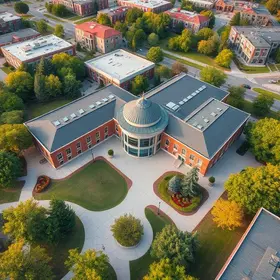
  • Founded in 1938, PCC is a two-year public, comprehensive community college and an area vocational school. We offer a well-rounded general education for the student planning to transfer to a four-year college or university and we meet the needs of the student desiring the skills needed to enter directly into the workforce. Some of our hallmark programs include Electric Power Technology, Ag Power Technology, Automotive Technology, and Nursing. We are accredited by the Higher Learning Commission of the North Central Association of Colleges and Schools. This accreditation reflects the high quality of our academic and technical programs. PCC is situated on an 80-acre campus. The main campus facility, completed in 1968, houses the administrative and student services offices, classrooms, learning resource center, Carpenter Auditorium, Delmar Riney Art Gallery and the Dennis Lesh Sports Arena. The campus also includes a vocational classroom facility, indoor and outdoor rodeo facilities, an Automotive Technology facility, the Riney Student Conference Center, Stanion Indoor Baseball/Softball Practice Facility, Stanion Baseball Field, the recently expanded Center for Electrical Power Technology and Chandler Hall - a nursing/allied health and arts building - completed in 2003. PCC provides an active campus environment for over 280 residents housed in five residence halls. The two newest facilities, North Hall and Scholarship Hall, were completed in 1998 and 2002 respectively. In addition to numerous student activities, the college offers over a dozen student organizations and clubs with additional opportunities to participate in music, arts, and athletics – both collegiate and intramural. PCC is a member of the highly competitive NJCAA Region VI, Jayhawk West Conference and offers 7 men's and 8 women's programs, including wrestling added in 2006. While the average daily attendance on-campus averages 500-600 students, we service more than 3,000 students annually. These students consist of full-time, part-time, on and off-campus. PCC is accredited by the Kansas State Department of Education and the Commission on Institutions of Higher Education of the North Central Association of Colleges and Schools.

Frequently Asked Questions

How much does Pratt Community College cost?
Pratt Community College's tuition is approximately $3,140 for In-State students and $3,464 for Out-State students.
What is Pratt Community College's ranking?
Pratt Community College ranks among the top 20% of community college in Kansas for: Least debt for graduating students.

Recent Articles

Required Course Full? Avoid Community College Degree Delays
Learn how a full required course can delay graduation, how to navigate waitlists, and how to find approved alternatives that protect your community college degree timeline and financial aid eligibility.
Catalog-Year Rules: Community College Graduation Requirements
Understand how catalog years determine community college graduation requirements, how enrollment breaks and major changes affect eligibility, and what to verify before choosing courses or switching to a newer catalog.
What If Your Community College Program Closes?
Learn what happens when your community college discontinues your program before graduation, including teach-out options, credit transfers, financial aid implications, student protections, and practical steps to finish your degree successfully.

Quick Facts (26-27)

  • Enrollment: 1,322 students
  • In-state tuition: $3,140
  • Out-state tuition: $3,464
  • Student-teacher ratio: 37:1
  • Minority enrollment: 35%
  • Source: Verified school update

Related School Videos

Did You Know?

For Kansas public community colleges, the average tuition is approximately $3,402 per year for in-state students and $4,296 for out-of-state students. For private community colleges, the average yearly tuition is approximately $17,451 per year. Read more about average community college tuition costs across the country.

The average community college acceptance rate in Kansas is 85%. Read more about national community college acceptance rates.

Kansas community colleges have a diversity score of 0.61, which is lower than the national average of 0.74. The most diverse community college in Kansas is Kansas City Kansas Community College. Read more about community college diversity statistics in the USA.

Quick Links