
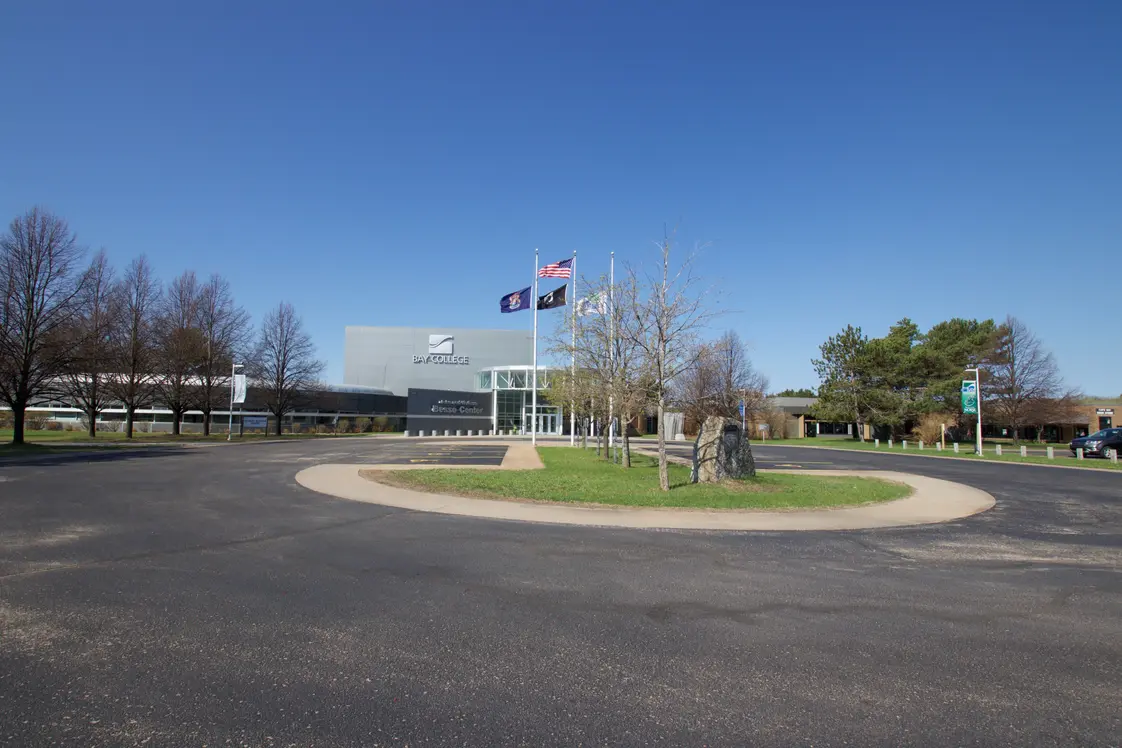
Bay de Noc Community College Photo #1

Bay de Noc Community College

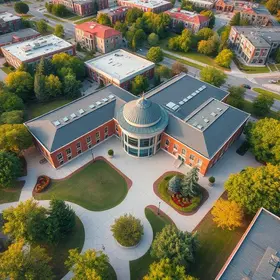
  • Located in the heart of Michigan`s beautiful Upper Peninsula, Bay de Noc Community College (or commonly known as Bay College) has provided quality higher education for more than 40 years. Bay College is known in the region for its superior teaching and abundant learning. The campus is situated on 160 acres and services over 5,000 credit students each year, including those completing baccalaureate and master degree programs sponsored by partner universities.

School Highlights

Bay de Noc Community College serves 2,149 students (31% of students are full-time).
The college's student-teacher ratio of 34:1 is higher than the state community college average of 33:1.
Minority enrollment is 15% of the student body (majority Hispanic and American), which is less than the state average of 40%.

Quick Facts (26-27)

  • Enrollment: 2,149 students
  • In-state tuition: $5,300
  • Out-state tuition: $9,600
  • Student-teacher ratio: 34:1
  • Minority enrollment: 15%
  • Source: Verified school update

School Overview

The teacher population of 64 teachers has declined by 59% over five years.
Bay de Noc Community College
(MI) Community College Avg.
Carnegie Classification
Associate's Colleges
Associate's Colleges: High Career & Technical-High Traditional
Institution Level
At least 2 but less than 4 years
Institution Control
Public
Public
Total Faculty
64 staff
70 staff

Showing 2019–2025.

School Calendar

Student Body

The student population of Bay de Noc Community College has grown by 13% over five years.
The student-teacher ratio of 34:1 has increased from 11:1 over five years.
The Bay de Noc Community College diversity score of 0.27 is less than the state average of 0.60. The school's diversity has grown by 12% over five years.
Total Enrollment
2,149 students
2,473 students

Showing 2018–2025.

Student-Teacher Ratio
34:1
33:1

Showing 2019–2025.

# Full-Time Students
661 students
889 students

Showing 2018–2025.

# Part-Time Students
1,488 students
1,584 students

Showing 2018–2025.

# Enrollment Undergraduate
2,149 students
2,151 students
# Full-Time Undergraduate Students
661 students
961 students

Showing 2018–2025.

# Part-Time Undergraduate Students
1,488 students
1,658 students
Total Dormitory Capacity
100 students
114 students

Showing 2018–2025.

% American Indian/Alaskan
3%
1%

Showing 2018–2025.

% Asian
1%
3%

Showing 2019–2025.

% Hispanic
3%
7%

Showing 2019–2025.

% Black
2%
16%
% White
85%
60%

Showing 2016–2025.

% Two or more races
5%
4%

Showing 2019–2025.

% Unknown races
1%
8%
Diversity Score
0.27
0.60

Showing 2016–2025.

College Completion Rate (Students who graduate in less than 4 years)
32%
31%

Showing 2017–2025.

Median Earnings 10 Years After Entry (measured in 2022-2023, in 2024 dollars)
$41,973
$41,695

Showing 2014–2023.

Points are in the dollars of their own College Scorecard release, and the colleges behind the state line differ by period. The lines do not show inflation-adjusted growth.

Tuition & Financial Aid

The public in-state tuition of $5,300 is more than the state average of $4,930. The in-state tuition has declined by 39% over four years.
The public out-state tuition of $9,600 is more than the state average of $6,838. The out-state tuition has declined by 7% over four years.
In-State Tuition Fees
$5,300
$4,930

Showing 2016–2025.

Out-State Tuition Fees
$9,600
$6,838

Showing 2016–2025.

Tuition Notes
In-state rate is annual fee for Delta County residents - 2020 tuition rates, for two semesters of 15 contact hours each. Includes tuition and related fees from 2020-2021 Educational Budgets from the financial aid office.
% Students Receiving Some Financial Aid
89%
89%

Showing 2016–2025.

Median Debt for Graduates
$12,438
$11,915

Showing 2011–2020.

Median Debt for Dropouts
$5,500
$5,500

Showing 2011–2020.

Sports

Total Sports Offered
4 sports
Sports
BaseballBasketball
Cross CountrySoftball

Extracurriculars

Total ExtracurricularsTotal Extra-curric.
21 extracurriculars
ExtracurricularsExtra-curric.
Club or Organization:
Art ClubAspiring Educators Club
Bay Area Campus Ministry (BACM)Bay Area Water Tech Assoc. (BAWA)
Bay College Anime ClubBay College Automotive Club
Bay Skills USABay West Coffee Klutch
Business Professionals of America (BPA)Campus Activities Board (CAB)
Circle KEarly Childhood Educators Club
EMT and Paramedic ClubGaming Galaxy
Norse ForceP.R.I.D.E. Organization
Phi Theta Kappa Honor SocietyRenage Writers
STEM ClubStudent Nurse Association


Recreational Athletic Programs:
Bay College Volleyball Club

Source: 2025 (or latest year available) Integrated Postsecondary Education Data System (IPEDS) , School Administrators

School Notes

  • Bay College has grown from a modest beginning with a limited curriculum in 1963 to serving an enrollment of more than 2,300 students in the fall of 2005. Bay College also opened a new West Campus located in Iron Mountain in the fall of 2007. Partnerships with various four-year schools allow students to continue taking classes on the Escanaba campus and to gain a baccalaureate degree without leaving town. In addition to these partnerships, Bay College continues its traditional occupational programs aimed at giving students the skills to enter the work force, community service, and transfer programs. These transfer programs are designed to allow students to begin their post-secondary education and explore career interests at Bay College, later applying their two-year degree program at a major college or university. Bay College has a strong history of dedicating itself to offering academically excellent and affordable public education in our region. The college prepares students to be continuous learners who succeed upon transfer, work effectively in the contemporary workplace, and function as citizens and leaders in their communities. The College is accredited by the Commission of the North Central Association of Colleges and Schools.

Frequently Asked Questions

How much does Bay de Noc Community College cost?
Bay de Noc Community College's tuition is approximately $5,300 for In-State students and $9,600 for Out-State students.
What schools are Bay de Noc Community College often compared to?
Bay de Noc Community Collegeis often viewed alongside schools like Lansing Community College by visitors of our site.
What sports does Bay de Noc Community College offer?
Bay de Noc Community College offers 4 interscholastic sports: Baseball, Basketball, Cross Country and Softball.

Recent Articles

Fast Credential or Degree Pathway? How to Choose
Short-term training has more funding options, but speed is only one consideration. Compare immediate job preparation with documented degree pathways, remaining coursework, future costs, and realistic plans for returning.
Aerospace & Chip Programs: Should You Follow the Funding?
New investment is expanding technical training, but funding alone should not determine your major. Learn how to evaluate funded programs, student access, career fit, and benefits for your entering class.
Should You Choose a Community College Program Built Around One Major Local Employer?
A community college program tied to one major employer can offer valuable training. Learn how to weigh specialized skills, local job dependence, and your options if that employer changes course.

Quick Facts (26-27)

  • Enrollment: 2,149 students
  • In-state tuition: $5,300
  • Out-state tuition: $9,600
  • Student-teacher ratio: 34:1
  • Minority enrollment: 15%
  • Source: Verified school update

Related School Videos

Did You Know?

For Michigan public community colleges, the average tuition is approximately $4,930 per year for in-state students and $6,838 for out-of-state students. For private community colleges, the average yearly tuition is approximately $9,806 per year. Read more about average community college tuition costs across the country.

The average community college acceptance rate in Michigan is 97%. Read more about national community college acceptance rates.

Michigan community colleges have a diversity score of 0.60, which is lower than the national average of 0.74. The most diverse community college in Michigan is Taylor Andrews Academy of Hair Design-Hair Lab Detroit Barber School. Read more about community college diversity statistics in the USA.

Quick Links