Career Training

A lucrative career can start right at community college. Consider the many smart career options that await after completing community college training programs. From horticulture to the music industry, culinary arts to aerospace, we cover the latest hiring practices, job requirements and trends in the job market.


View the most popular articles in Career Training:

Careers: Smart Grid Tecnology

Updated
|
Careers: Smart Grid Tecnology
The "smart grid" presents a myriad of opportunities for green collar jobs. Learn about the job prospects in the industry and how your local community college can provide you with the training to capitalize on this growing industry.

Our nation’s energy delivery system is undergoing a significant transformation, and soon, the “smart grid” will replace the electric system of yesteryear.

The grid is deemed “smart” because it can route power according to specific needs and conditions, which is a sharp contrast to today’s grid, which merely “broadcasts” power from central generators. The smart grid is more reliable, transparent, cost-effective, and energy-effective than the current infrastructure, and the system is how America plans to manage its future energy independence, emergency resilience, and ability to generate clean power.

This video explains smart grid technology.

Under the Obama Administration, along with the Federal Smart Grid Task Force established through the Energy Independence and Security Act of 2007, the smart grid will soon become a reality. Areas around the country, such as Southern California and Cincinnati, have already begun installing smart meters to create a national system.

The Smart Grid: Smart Career Choices

The Department of Energy’s Grid 2030 Vision plans to modernize and revolutionize the electric system within ten years. The changes will impact every mile of the electricity system, reaching every consumer and business. Clearly, a change of this magnitude will cost billions of dollars and create “green collar” job opportunities for many individuals.

In fact, according to KEMA, the leading authority in energy consulting, in the next four years alone, the $16 billion earmarked for intelligent grid funding

. . .read more

Careers: Lead-Safe Renovator

Updated
|
Careers: Lead-Safe Renovator
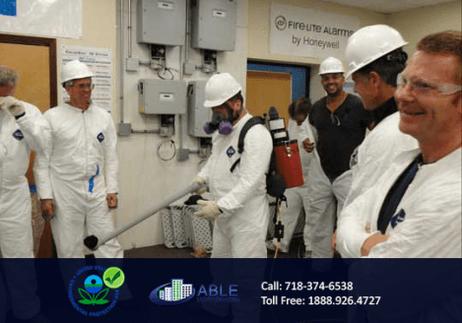
Community colleges are leading the way in offering lead-safe certification, which will be required by law starting in April 2010. Learn about the courses and how you can obtain your certificaiton at your local community college.

A new law regarding the renovation of buildings that contain lead paint will go into effect in April 2010, and it has contractors and other professionals scrambling to earn the certification that will be mandated by law. Thankfully, some community colleges offer courses to help with the certification process.

Starting in April 2010, federal law will require all professionals hired to renovate, repair, or paint homes, childcare facilities, or schools built before 1978 to be certified in lead-safe work practices. The change is mandated by the Environmental Protection Agency's (EPA's) new Lead Renovation, Repair and Painting (RRP) Rule. The EPA's new rule requires that accredited centers train renovators in lead-safe work practices, and renovators and renovation firms must be certified as capable of working safely with lead-based paint.

The new law is designed to improve public health and safety, as working with lead paint can result in lead dust and chips being disseminated in the air, harming the health of children and adults. According to a New York Fox News station report, 14% of the children in New York State who had elevated levels of lead in their blood suffered from the condition as a direct result of home renovation projects.

Training for Lead-Safe Workers

Contractors and other professionals who work with paint in buildings built before 1978 must show that they have taken a training course and received a certificate in lead-safe working

. . .read more

Careers: Nano-Technology

Updated
|
Careers: Nano-Technology
Learn about the lucrative career opportunities in nano-technology and how you can begin your training right at community college.

Some of the hottest jobs of the future may be in the nanotechnology industry. For community college students who dream big, the key to a bright future may be thinking small – very small.

The National Nanotechnology Initiative defines nanotechnology as “the understanding and control of matter at dimensions between approximately 1 and 100 nanometers where unique phenomena enable novel applications.” A nanometer is one-billionth of a meter. According to the NNI, nanotechnology involves “imaging, measuring, modeling, and manipulating matter” at these tiny scales.

Students who earn associate’s degrees in nanotechnology are prepared to work in research, production, marketing, and business environments where knowledge of nanoscience is needed.

The Nanotechnology Job Market

Nanotechnicians work in various fields, including biomedicine, biotechnology, agriculture production, and environmental analysis. . The website for Minnesota State Community College and Technical College’s Nanotechnology program quotes Jack Uldrich and Deb Newberry, the authors of the book The Next Big Thing Is Small. According to these experts, “The market for nanotechnology in the United States was rapidly growing and projected to reach $1 trillion by 2010. Growth over this period is expected to produce between 800,000 and two million new technical jobs.”

The National Nanotechnology Initiative reports that in the United States, federal funding for nanotechnology has increased “from approximately $464 million in 2001 to nearly $1.5 billion for the 2009 fiscal year.”

This video explains what nanotechnology is.

. . .read more

Careers: Sustainable Energy Technician

Updated
|
Careers: Sustainable Energy Technician
With the change in energy production trends, sustainable energy technology careers are in high demand, and you can start your training for a highly-demanded career right at your local community college.

In today’s difficult job market, community college students looking to position themselves for career security and success have an exciting new set of options to consider: programs leading to associate’s degrees or certificates in sustainable energy technologies.

A Growing Industry

Just a few years ago, sustainable energy was more of a dream than a reality. Today, sustainable energy is emerging as an industry in its own right – one that demands trained, competent workers. The American Recovery and Reinvestment Act of 2009 (President Obama’s economic stimulus package) provides money for “solar farms, wind turbines, electrical grid updates, mass transit, and the weatherizing and retrofitting of buildings,” according to Business Week. By the estimates of some environmental groups, this spending is expected to produce 1 million to 1.5 million new jobs.

Reporting on the then-emerging trend in 2008, the New York Times articulated that national starting salaries for sustainable energy workers range from $35,000 to $45,000 for graduates of two-year degree programs.

Fortunately for college students who are attracted to the growth potential and solid starting salaries in this industry, community colleges are beginning to offer more programs in two-year degrees or certificates for prospective sustainable energy industry workers.

This video reports on Renewable Energy Program at Hutchison Community College.

Sustainable Energy Degree and Certificate Programs

Across the country, community colleges are offering niche programs that can jumpstart your career in

. . .read more

Careers: Wind Energy Technology

Updated
|
Careers: Wind Energy Technology
If you are looking for a recession-proof career with excellent job prospects, consider enrolling in a wind energy program at your local community college.

If you are considering a future career or a professional change, let the winds of change take you into a new industry. For community college students, the American wind energy industry is growing rapidly. Consider the following indicators:

  • The American Wind Energy Association (AWEA) reports that by the end of 2008, approximately 80,000 people in the United States were employed in the wind industry, up from 50,000 at the end of 2007.
  • Wind turbine installations in 2008 were up 50% from the previous year, according to the AWEA report.
  • By the end of 2008, the United States had pulled ahead of Germany to lead the world in terms of wind energy production and cumulative wind power generating capacity.
  • The 2009 federal stimulus is providing federal funding to colleges and universities in various states to support the development of wind turbine technology.
  • The U.S. Department of Energy has developed a Wind and Hydropower Technologies Committee, which is working to realize a goal of having 20% of the energy in the United States produced by wind by the year 2030.

The explosion of the wind energy industry comes at the perfect time for Americans who are out of work and looking to enroll in a community college program that can train them for a new career.

The U.S. Bureau of Labor Statistics reports that wind turbine technicians “build or service individual turbines, help with the construction of entire wind farms, or work indoors at

. . .read more

Recent Articles

Community College Success Rates 2025: Outcomes & Trends
Updated 2025 analysis of community college success rates, completion, transfer, costs, enrollment, and strategies that shape student outcomes.
Community Colleges in 2025: Combating Stereotypes with Impact
Updated insights on how community colleges are dispelling myths, growing enrollment, and expanding pathways in 2025.
2025 FAFSA Changes Explained for Community College Students
A comprehensive guide to 2025 FAFSA changes, what community college students must know, new eligibility rules, timelines, and tips to maximize federal aid.

Career Training

GREEN CAREERS
Are you concerned about the environment? Do you want to help stem global warming and rainforest decimation? If so, a green career may be for you. Community colleges around the country are offering programs in sustainable energy, from solar panels to wind turbines. From biodiesel to energy storage, explore your green career options here.
HEALTHCARE CAREERS
Recession-proof and rewarding, healthcare careers can be started right from community college. Here you’ll identify the hottest trends in health care degrees, earn how to become an emergency technician and read why community college is a great place to start your addiction counseling degree.
TEACHING CAREERS
Great teaching careers are started at community colleges. Keep up to date on the latest hiring standards, education requirements, and continuing education for teacher initiatives. Learn what role community colleges play in furthering the skills of future and current teachers and what degrees are the most lucrative.
CULINARY CAREERS
With renowned culinary programs, community colleges are a delicious place to begin your culinary arts career. From brewing beer to cake decorating, community colleges offer a wide variety of culinary degrees. Learn how to earn a college degree while drinking wine, identify 5-star culinary programs, and turn that baking hobby into a lucrative career.
BUSINESS CAREERS
Jump start a career in business right at your community college. Explore the various business degree programs available, from marketing to human resources, these articles will provide you with valuable information on business career opportunities for community college graduates. Many famous entrepreneurs started their careers at community college, add your name to the list.
CREATIVE CAREERS
Community colleges offer a myriad of degree programs for students interested in creative careers. From glass blowing to fashion design, community college degrees are opening doors into many creative industries. Learn how you can prepare for a career in radio broadcasting, cosmetology or music at community college.
TECHNOLOGY CAREERS
Indeed, technology careers, ranging from cyber-security to nano-technology, can all start from community college training. Get your feet wet with waterbotics, crack into cyber-security or dive into marine biology at your local community college.
PUBLIC SERVICE CAREERS
Begin your career in public service at community college. Receive cutting-edge firefighting training, lean more about air force programs and learn how community colleges are training our armed forces. Regardless of the badge you carry, a honorable public service career can be jump started at community college.
MANUFACTURING CAREERS
– From welding technology to automobile manufacturing community colleges are training students for lucrative manufacturing careers. Get the scoop on middle skills, labor shortages and the best degrees for manufacturing careers.
LUCRATIVE JOBS
There are lots of lucrative careers for community college graduates. Here we’ll cover the top career choices for two-year degree holders, six-figure jobs you can land with an associate’s degree, and how community college can take your career to the next level.
CAREER TRAINING 101
Everything you need to know about the earnings potential of a community college degree. From fast track training to careers suited for introverts, we’ll cover a variety of career related topics. Learn more about a recession proof careers, casino dealing certification and theology programs at community college.
FARMING CAREERS
Small farms are an important part of creating a sustainable food supply. Your community college has the skilled teachers who can teach you 21st-century farming techniques.
HOSPITALITY CAREERS
Careers in the hospitality industry: catering, restaurant, wedding planning, tourism, hospitality & event management