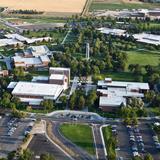
The mission of Great Basin College is to provide superior, student-centered, post-secondary education in central and northeastern Nevada. We provide five types of educational opportunities: university transfer courses, occupational and technical studies, developmental courses, community education and selected baccalaureate programs, along with student support services and special business-education partnerships.
School Highlights
Great Basin College serves 3,320 students (32% of students are full-time).
The college's student-teacher ratio of 28:1 is lower than the state community college average of 31:1.
Minority enrollment is 46% of the student body (majority Hispanic), which is less than the state average of 66%.
Quick Facts (2026)
Enrollment: 3,320 students
In-state tuition: $2,700
Out-state tuition: $9,345
Student-teacher ratio: 28:1
Minority enrollment: 46%
Source: Integrated Postsecondary Education Data System (IPEDS)
Note: Data may not be displayed on any public-facing website or service that replicates or resembles a college search or review portal without prior written permission. See our Terms of Service.
Number of Programs Offered
-2
9
Student Body
The student population of Great Basin College has declined by 11% over five years.
The student-teacher ratio of 28:1 has increased from 13:1 over five years.
The Great Basin College diversity score of 0.63 is more than the state average of 0.00. The school's diversity has grown by 12% over five years.
Note: Data may not be displayed on any public-facing website or service that replicates or resembles a college search or review portal without prior written permission. See our Terms of Service.
Note: Data may not be displayed on any public-facing website or service that replicates or resembles a college search or review portal without prior written permission. See our Terms of Service.
Note: Data may not be displayed on any public-facing website or service that replicates or resembles a college search or review portal without prior written permission. See our Terms of Service.
Note: Data may not be displayed on any public-facing website or service that replicates or resembles a college search or review portal without prior written permission. See our Terms of Service.
Note: Data may not be displayed on any public-facing website or service that replicates or resembles a college search or review portal without prior written permission. See our Terms of Service.
Note: Data may not be displayed on any public-facing website or service that replicates or resembles a college search or review portal without prior written permission. See our Terms of Service.
Note: Data may not be displayed on any public-facing website or service that replicates or resembles a college search or review portal without prior written permission. See our Terms of Service.
Note: Data may not be displayed on any public-facing website or service that replicates or resembles a college search or review portal without prior written permission. See our Terms of Service.
Note: Data may not be displayed on any public-facing website or service that replicates or resembles a college search or review portal without prior written permission. See our Terms of Service.
Note: Data may not be displayed on any public-facing website or service that replicates or resembles a college search or review portal without prior written permission. See our Terms of Service.
Note: Data may not be displayed on any public-facing website or service that replicates or resembles a college search or review portal without prior written permission. See our Terms of Service.
Note: Data may not be displayed on any public-facing website or service that replicates or resembles a college search or review portal without prior written permission. See our Terms of Service.
Note: Data may not be displayed on any public-facing website or service that replicates or resembles a college search or review portal without prior written permission. See our Terms of Service.
Note: Data may not be displayed on any public-facing website or service that replicates or resembles a college search or review portal without prior written permission. See our Terms of Service.
Note: Data may not be displayed on any public-facing website or service that replicates or resembles a college search or review portal without prior written permission. See our Terms of Service.
College Completion Rate (Students who graduate in 4 years or more than 4 years)
Note: Data may not be displayed on any public-facing website or service that replicates or resembles a college search or review portal without prior written permission. See our Terms of Service.
Note: Data may not be displayed on any public-facing website or service that replicates or resembles a college search or review portal without prior written permission. See our Terms of Service.
Tuition and Acceptance Rate
The public in-state tuition of $2,700 is equal to the state average of $2,700. The in-state tuition has declined by 24% over four years.
The public out-state tuition of $9,345 is equal to the state average of $9,345. The out-state tuition has declined by 27% over four years.
Note: Data may not be displayed on any public-facing website or service that replicates or resembles a college search or review portal without prior written permission. See our Terms of Service.
Note: Data may not be displayed on any public-facing website or service that replicates or resembles a college search or review portal without prior written permission. See our Terms of Service.
Note: Data may not be displayed on any public-facing website or service that replicates or resembles a college search or review portal without prior written permission. See our Terms of Service.
Note: Data may not be displayed on any public-facing website or service that replicates or resembles a college search or review portal without prior written permission. See our Terms of Service.
Note: Data may not be displayed on any public-facing website or service that replicates or resembles a college search or review portal without prior written permission. See our Terms of Service.
Acceptance Rate
n/a
90%
Source: 2025 (or latest year available) Integrated Postsecondary Education Data System (IPEDS)
School Notes
Founded in 1967, Elkoans bootstrapped a community college, the
state's first. Its founders, who called themselves the "Yo Yo Club"
because of the ups and downs of the project, had rallied
townspeople to the cause. A stir for a technical college had begun
in the early 1960s. Fred Harris and Mark Chilton offered land in
1962 on the Mountain City Highway to the university regents for a
campus. But the regents, amused, focused on surging Southern
Nevada, which was to become the University of Nevada-Las Vegas in
1968. Our occupational and technical studies are developed to meet
the demands of the local economy. Our programs lead to immediate
and meaningful employment for our students. For the employer, we
provide short- and long-range training programs that create a
productive workforce that knows how to learn and to work in harmony
with others. Elizabeth Griswold Hall, the College's newest
residential hall, has opened its doors to students. Griswold Hall
is another convenient option for new and continuing students. This
hall is fully outfitted with high-speed Internet connections, a
game room, group and individual study nooks, laundry rooms, and
kitchen facilities. The Residence Suites on campus also offer
apartment style living for individual and family students. Great
Basin College is regionally accredited by the Northwest Commission
on Colleges and Universities. GBC is a member college of the Nevada
System of Higher Education (NSHE).
Frequently Asked Questions
How much does Great Basin College cost?
Great Basin College's tuition is approximately $2,700 for In-State students and $9,345 for Out-State students.
What schools are Great Basin College often compared to?
Great Basin Collegeis often viewed alongside schools like College of Southern Nevada by visitors of our site.
What is Great Basin College's ranking?
Great Basin College ranks among the top 20% of community college in Nevada for: Least expensive tuition.
Nearby Schools
The nearest community college to Great Basin College is College of Southern Idaho (137.0 miles away)
For Nevada public community colleges, the average tuition is approximately $2,700 per year for in-state students and $9,345 for out-of-state students. For private community colleges, the average yearly tuition is approximately $14,315 per year. Read more about average community college tuition costs across the country.