During times of political change, economic uncertainty, and fluctuating levels of job security, students of all ages are facing an array of personal and academic pressures. Many community college students and applicants are trying to cope with the mounting educational costs paired with added stresses of job loss, reduced wages, or soaring costs of living.
As many college applicants are struggling to find ways to pay for higher education expenses during economic tumultuousness, community college leaders across the country are seeking out new forms of financial aid to provide students with a greater scaffold of fiscal support.
Recent Financial Aid Reforms
In just the past several years, enormous changes have been made to the federal financial aid program, as struggling college students expressed with rising voices the difficulty of paying for the costs of college with limited access to money or means.
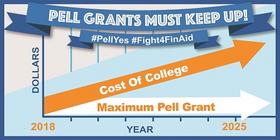
According to Art Hauptman from the Progressive Policy Institute, there was an initial jump-start to increasing federal student aid funding in 2005, when former President Bush renewed the “Higher Education Act.” With this act, the President proposed an increase to the Pell grant of $500 over the course of five subsequent years. As Pell grants were initially created to raise educational aspirations of socially and economically struggling Americans, many believe that the Pell grant increase would stimulate a boost in college accessibility and enrollment. Despite this positive reform, however, Hauptman asserts that additional revisions must be put into action. As Hauptman further asserts, political and school leaders should usher in five specific changes:
- The federal government should make the financial aid application process easier and less complex, allowing potential students to access aid without discrepancies or unnecessary burdens.
- Second, the government should reform its student funding to states and institutions by requiring that the government only matches the funding that states and institutions provide towards Pell grant recipients.
- Third, the restrictions regarding who has access to financial aid should be tightened in order to more thoroughly determine which students would most greatly benefit from fiscal assistance.
- Fourth, the federal government should offer incentives to boost college enrollment and graduation rates. As low graduation rates plague both community colleges and universities, incentives may encourage a boost in student performance.
- Fifth, the government should employ more aggressive early intervention plans and tactics, providing students and families with support much earlier than the current methods of providing a loan or aid check to cover academic bills.
As Hauptman asserts, diverse changes must be made to the entire financial aid picture in order to boost student support and success. Specifically, Hauptman argues that Congress and the higher education community as a whole should strive for consistent improvements of the “Higher Education Act,” including “A substantial and meaningful reworking of the federal student aid system to better meet the needs of the most disadvantaged students while expanding educational opportunity for everyone.”
This video explains the FAFSA program.
Looking Ahead: Potential Changes to College Funding
As former President Bush took action revising the “Higher Education Act,” community college students and leaders should be aware of additional changes and revisions to financial aid and collegiate support. Prior to President Obama’s inauguration, he too acknowledged the demand for financial aid reform. According to Obama’s campaign, college costs have soared by nearly 40 percent in just the last five years alone. Adding to this constraint, the average college graduate enters into the workforce with nearly $19,000 of student debt.
As nearly two million qualified and academically capable students are deterred from attending college due to the rising costs and constraints, President Obama asserts that serious reforms and changes will be pursued. Specifically, according to Obama’s website, his Presidential goals include creating a new “American Opportunity Tax Credit,” wherein citizens will receive a credit of $4,000 in exchange for working in various tasks of community service. According to Obama’s data, this $4,000 credit will help potential and current students cover nearly 2/3 of the average tuition costs at public universities, while this credit will even more powerfully encompass almost all of the costs of the average community college tuition bill.
This TEDTalk discusses closing the higher education funding gap.
In these changing economic and political times, it is important for all students to stay abreast of changes in financial aid policies. Hopefully, financial aid, grants, and loans will continue to work in the favor of helping students achieve their higher education goals.
Questions? Contact us on Facebook. @communitycollegereview