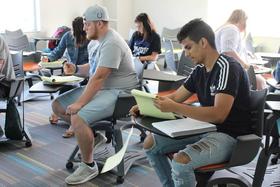
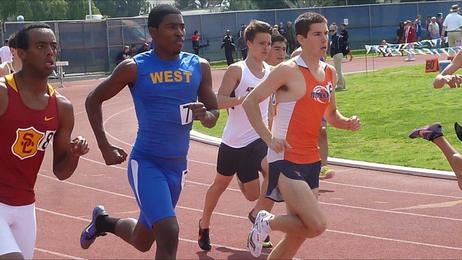
Community colleges enroll between 11 and 12 million students annually, of which over 50,000 participate in intercollegiate athletics. Almost one half of community colleges have intercollegiate sports programs. Community colleges are moving toward greater participation in athletics, either by starting new programs or expanding existing programs. The programs vary considerably, both in the type and number of sports available. After discussing the regulation of community college athletics and providing some examples of athletic programs, this report examines the case for athletics in the community college setting.
National Junior College Athletic Association
The National Junior College Athletic Association (NJCAA) regulates intercollegiate athletics of community colleges. It is the community college counterpart of the National College Athletic Association (NCAA), which oversees athletics at four-year institutions. The organization's goal is to promote athletics as a valuable component of the educational experience at community colleges. The NJCAA has 530 member colleges participating in 15 men's and 13 women's sports. There are 50 national championships and nine football bowl games.
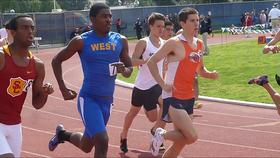
Community college students have an opportunity to participate in numerous intercollegiate sports. Presently, the following sports are sanctioned by the NJCAA:
For men and women:
- Basketball
- Bowling
- Cross country
- Golf
- Half marathon
- Indoor track and field
- Lacrosse
- Outdoor track and field
- Soccer
- Swimming and diving
- Tennis
Also for men:
- Baseball
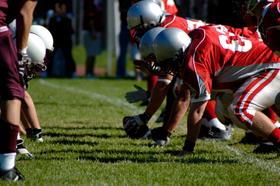
- Football
- Ice hockey
- Wrestling
Also for women:
- Fast pitch softball
- Volleyball
Examples of Community College Intercollegiate Athletic Programs
Few generalizations can be made about community college athletics programs. One might assume that larger community colleges would have more sports opportunities than smaller colleges, but that is not necessarily the case. A few examples are discussed below.
- Brevard Community College in central Florida has about 25,000 students. There are four integrated campuses, a virtual campus, and an aerospace program at the Kennedy Space Center. Three sports are available for men: baseball; basketball; and golf. The women's sports are: basketball; softball; and volleyball.
- Tacoma Community College in Washington enrolls almost 15,000 students annually. The college offers eight intercollegiate sports programs: soccer, basketball, baseball, and golf for men, and volleyball, soccer, basketball, and golf for women. Scholarships are available in all sports in the form of tuition waivers and student jobs. The Athletic Department believes that athletic participation adds a "real plus" to the overall educational experience.
- Hudson Valley Community College in Troy, New York, enrolls about 12,000 students each semester. The college offers a range of men's and women's sports. For men there are football, soccer, basketball, ice hockey, bowling, baseball, and lacrosse. Women participate in cross country, soccer, volleyball, tennis, bowling, basketball, and softball.
- The college is proud of its graduates: the website has a list of former student-athletes and the colleges to which they transferred, including Syracuse, Kentucky Wesleyan, University of Rhode Island, and Delaware State University. Hudson Valley also has an intramural program, open to students, faculty, and staff, that offers racquetball, ping pong, floor hockey, and indoor and outdoor soccer.
- Miami Dade College in south Florida is one of the largest community colleges in the U.S. Its 160,000 students matriculate at eight campuses and numerous outreach centers. Although Miami Dade considers intercollegiate athletics to be an integral part of the overall educational process and mission of the college, it only has five programs: basketball and baseball for men and basketball, softball, volleyball for women.
- Fond du Lac Tribal and Community College in Minnesota instituted an intercollegiate sports program in the fall of 2007. For its inaugural season, the college offered men's football in the fall and will offer women's softball in the spring of 2008. Sports planned for the 2008 academic year are women's volleyball and men's and women's basketball. The college hopes to begin other programs if student interest is expressed and funding can be obtained. According to the Athletic Department, the sports teams are a "natural step in the evolution of the college and will help the institution continue to grow."
No Athletics on Some Community College Campuses
Some community colleges do not offer athletics programs to their students. An example is Austin Community College, a large community college with campuses and other adjuncts at nine other Texas locations. The no-athletics policy is primarily a matter of finances. The funding from the state covers only 12% of the college's operating costs. Thus, the college decided to use all the funds for academics, "the area that matters most." In addition, campus surveys have shown that a majority of students do not have time for sports and that a relatively small number of students actually participate.
The Community College of Vermont has an unusual format of operating from 12 learning centers throughout Vermont and online. Although it has an administrative headquarters in Waterbury, it has no central campus, no residential facilities, and no athletics. According to President Tim Donovan, the college recruits smart people and gives them a place to excel.
Educational Value of Athletics at the College Level
The role, if any, of intercollegiate athletics in higher education generally has long been a subject of controversy. Are athletics one of many diverse educational opportunities available to students or are they extracurricular activities with little educational value? Notwithstanding the debate, athletics programs are entrenched in four-year colleges and universities. Moreover, participation in intercollegiate sports is growing at the community college level.
The NJCAA believes that athletics enhance community college life and bring more students and more money to the colleges. Community colleges that offer intercollegiate sports regard the athletics programs as an integral part of the education they offer. An eloquent explanation of the value of intercollegiate sports competition in the community college setting was given by California's Commission on Athletics:
Sports are educational in the best sense of that word because they teach the participant and the observer new truths about testing oneself and others, about the enduring values of challenge and response, about teamwork, about discipline and perseverance. Above all, intercollegiate contests — at any level of skill — drive home a fundamental lesson: goals worth achieving will be attained only through effort, hard work and sacrifice, and sometimes even those will not be enough to overcome the obstacles life places in our path.
Study Seeks Views of Community College Leaders about Athletics
Over the past few years, studies have been conducted concerning the role of intercollegiate athletics in the context of four-year institutions. These studies called into question whether athletics actually have the positive impact that proponents intend, such as encouraging school spirit, assisting in recruitment and enrollment, or supporting the mission of higher education in general.
In contrast, little research has been done on the role of athletics in community college education. Moreover, it is not clear whether the conclusions of the studies on four-year institutions apply in the context of two-year colleges, given their differing student bodies, educational missions, and relationships to the community. Certainly, well-known criticisms leveled at NCAA Division I football and basketball programs do not have any counterparts in the community college context. While community college teams may seek corporate sponsorships, the commercialization and lack of balance surrounding some NCAA teams are not present at community colleges.
A 2007 study questioned community college presidents and chairpersons of boards of trustees in six states to determine the extent of their knowledge and understanding of athletics at their colleges. The leaders who participated agreed that athletic competition promotes pride in the institution among students, faculty, staff, and the community in general. Those surveyed admitted that they had little knowledge about the funding of athletic programs or the procedures for starting new programs. There was no consensus, however, on whether intercollegiate athletics contributes to the accomplishment of the colleges' educational mission. The study concluded that the leadership of community colleges may not have sufficient data to make informed decisions about whether to expand, contract, or terminate existing programs or to begin new programs.
Conclusion
The trend in community college athletics is moving toward more, rather that less, intercollegiate athletics. Placed in its best light, intercollegiate competition that encourages personal development is an integral part of a student's overall educational experience. Sports programs may also attract more students to a community college and enhance pride in the college both on campus and within the community. It seems inevitable, however, that the educational value of athletics in higher education will continue to generate controversy. With the specter of less funding already present or looming on the horizon, it is not clear that community colleges will continue to devote resources to start or expand athletics programs.
References:
National Junior College Athletic Association,
Expansion of Community College Athletic Programs, Laura Ann Byrd and Mitchell R. Williams, for the Community College Enterprise (Fall 2007),
https://eric.ed.gov/?id=EJ843256
Community College President's Perceptions of Intercollegiate Athletics, Mitchell R. Williams and Kevin Pennington for the Community College Enterprise (Fall 2006)
https://eric.ed.gov/?id=EJ846017
College Athletics - History of Athletics in U.S. Colleges and Universities - The Role and Scope of Intercollegiate Athletics in U.S. Colleges and Universities, http://education.stateuniversity.com/pages/1853/College-Athletics.html
Brevard Community College Athletics, http://www.brevard.cc.fl.us/index.php?mainframe=/athletics/content/&subnavframe=/athletics/content/sub_nav.html
Tacoma Community College Athletics, https://www.tacomacc.edu/tcc-life/athletics
Miami Dade College Athletics.
http://www.mdc.edu/main/about/whymdc/athletics.asp
Fond du Lac Tribal and Community College Athletic Department,
http://fdltcc.edu/campus-life/thunder-athletics/
Hudson Valley Community College Athletics, https://www.hvcc.edu/athletics/index.php
Austin Community College, Frankly Speaking with the Board of Trustees in Cy-Pres,